
The reality of older clay and cast-iron sewer lines in Del Paso Heights
Understanding the unique drainage challenges of pre-1960s homes in Del Paso Heights, from vitrified clay laterals to cast-iron scale.
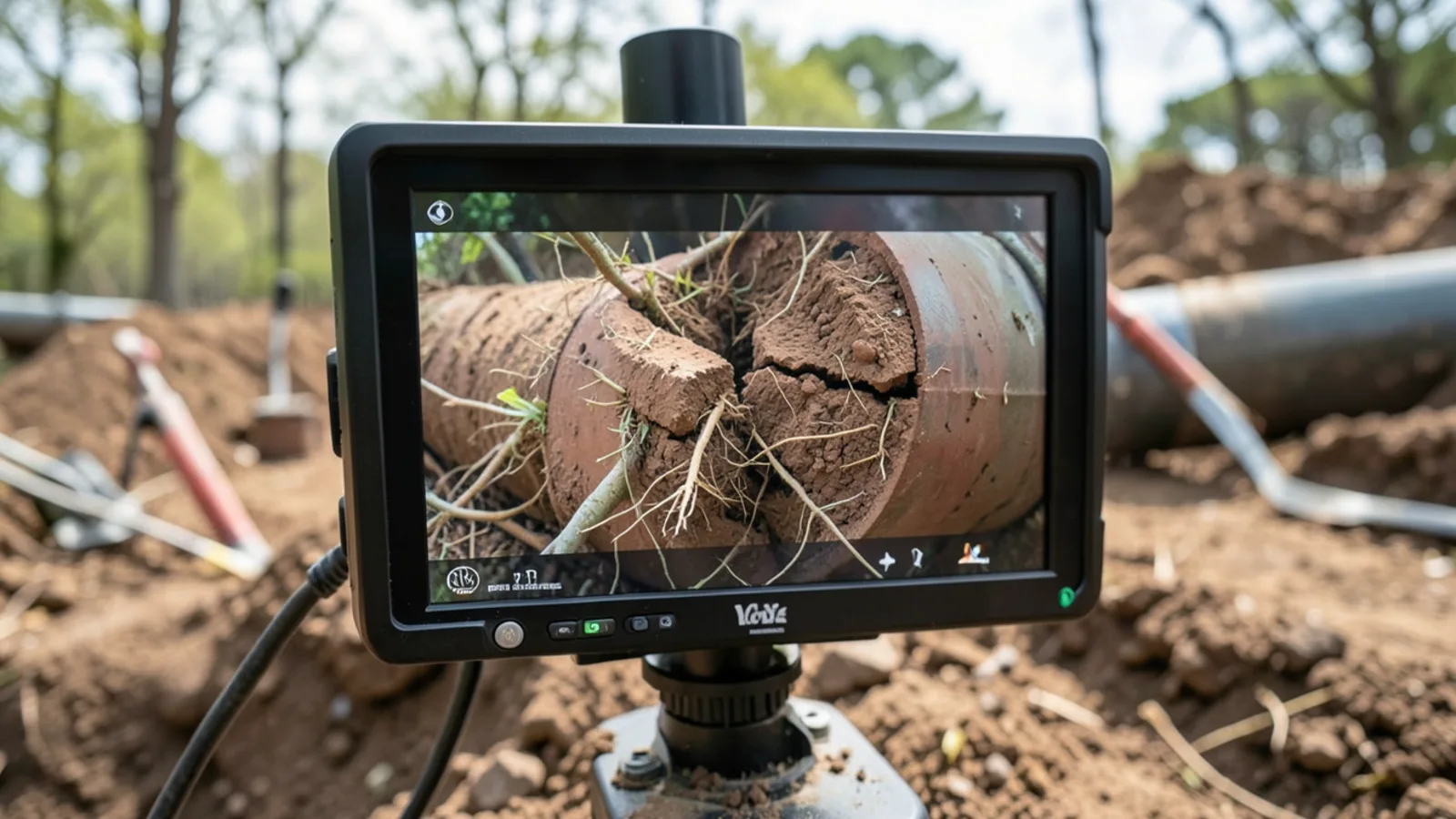
Del Paso Heights is an established residential neighborhood in northern Sacramento with housing stock built primarily between the 1920s and late 1950s. While these older homes feature spacious residential parcels and mature tree canopies, their underground drainage infrastructure is reaching or exceeding its engineered operational lifespan.
If your home in Del Paso Heights suffers from recurring sewer backups, gurgling toilets, slow-draining bathtubs, or foul sewer odors in the front yard, the cause is almost certainly found in the original pipe materials beneath the ground: vitrified clay pipe (VCP) and unlined cast iron.
## Quick Answer: Diagnosing and Fixing Pre-1960s Sewer Laterals in Del Paso Heights
The majority of sewer emergencies in Del Paso Heights stem from failed mortar joints in vitrified clay sewer laterals and internal channel rot in cast-iron waste stacks. Pre-1960s clay pipes were installed in short four-foot segments sealed with cement mortar or oakum that degrade over decades. Roots from mature valley oaks, camphor trees, and elms penetrate these seams, creating dense blockages that standard drain snakes can only poke temporary holes through.
A permanent resolution requires a high-resolution color sewer camera inspection to locate root intrusion points and pipe fractures, followed by high-pressure hydro-jetting (4,000 PSI) for maintenance or trenchless HDPE pipe bursting for permanent replacement under City of Sacramento Community Development Department permits (300 Richards Blvd). For expert sewer diagnostics, contact our licensed C-36 plumbing team at (207) 419-2600.
## Vitrified Clay Pipe Joints: Why Mature Roots Seek Out Pre-1960s Laterals
Prior to the widespread adoption of plastic ABS piping in the late 1960s, residential sewer laterals connecting homes to municipal sewer mains were constructed using vitrified clay pipe (VCP). Clay pipe was manufactured in short segments of three to four feet, with flared bell-and-spigot joints.
When these sewer lines were laid sixty to ninety years ago along neighborhood avenues like Grand Avenue, Marysville Boulevard, and Elm Street, plumbers sealed the joints using cement mortar or tarred oakum rope. Over decades of Sacramento's extreme wet-dry soil cycles, these rigid mortar seals crack, crumble, and separate:
- **Expansive Clay Soil Movement**: Sacramento soil expands during wet winter atmospheric rivers and contracts during hot, dry summer months, placing continuous shear stress on unreinforced bell joints.
- **Moisture Vapor Leaks**: Hairline cracks in deteriorated mortar release warm, nutrient-rich moisture vapor into surrounding dry dirt.
- **Root Hairpin Penetration**: Tree roots detect this moisture gradient. Microscopic root hairpins enter the pipe through joint openings less than one millimeter wide.
- **Root Ball Expansion**: Inside the pipe, roots feed on wastewater, expanding into thick woody masses that fill the pipe diameter, trap toilet paper, and cause total household sewage blockages.
Unlike modern smooth plastic piping, clay pipes have rough interior seams every few feet that catch debris, creating localized blockages even before root masses completely close off the line.
Practitioner Insight
> **Practitioner Insight**: If your Del Paso Heights home still has its original cast-iron cleanout threaded cap located in the front flowerbed, never force it open with an oversized pipe wrench if it has rusted shut. Older cast-iron cleanout tees can crack beneath the soil under heavy torque. Our plumbers use penetrating solvent and specialty cleanout sockets or install an ABS expansion plug to preserve the fitting.
## Cast Iron Stacks and Channel Rot in Del Paso Heights Crawlspaces
Inside the home foundation and extending out toward the yard, older Del Paso Heights residences rely on cast iron waste stacks and horizontal drain runs suspended beneath raised subfloors. Cast iron is mechanically strong, but it suffers from internal chemical corrosion over decades of exposure to acidic sewer gases and wastewater:
- **Tuberculation & Internal Scale**: Rust nodules, mineral scale, and calcified grease form along the interior cast-iron pipe wall. This rough oxidation reduces a 4-inch pipe's effective interior diameter down to two inches or less, creating friction points that grab solid waste.
- **Channel Rot Along the Pipe Invert**: Wastewater flows along the bottom (invert) of horizontal cast-iron pipes. Over 50 to 70 years, hydrogen sulfide gas condenses into mild sulfuric acid on the pipe crown and settles in the flow line, gradually rusting through the bottom of the pipe entirely.
- **Sub-Floor Crawlspace Contamination**: When channel rot breaches the pipe wall, wastewater begins seeping into the dirt crawlspace under the house. Homeowners frequently notice persistent earthy odors, sudden fruit fly infestations, or damp floorboards before realizing an underground sewer line has disintegrated.
## Cable Snaking vs. Hydro-Jetting vs. Trenchless Pipe Bursting
When a sewer lateral backs up in Del Paso Heights, homeowners face several repair options ranging from quick emergency clears to permanent infrastructure replacement. Understanding the technical differences prevents wasting money on repeated temporary snaking calls.
| Method | Root Clearing Capability | Pipe Interior Impact | Recurrence Window | Permit Needed? | Long-Term Durability |
|---|---|---|---|---|---|
| Mechanical Cable Snaking | Pokes 2-inch hole through center of root ball; leaves 70% of roots intact | Steel blades can crack brittle clay walls or gouge flaking cast iron | 4 to 8 weeks before roots regrow and catch waste | No | Temporary emergency relief only |
| High-Pressure Hydro-Jetting | 4,000 PSI rotating nozzle shears roots flush against pipe barrel | Cleans away heavy grease and mineral scale without pipe wall damage | 18 to 24 months with regular maintenance | No | Preserves structurally sound pipes |
| Trenchless HDPE Pipe Bursting | Completely replaces old clay line with continuous fused HDPE pipe | Destroys old compromised clay host pipe; installs joint-free pipe | 50+ years; root-proof joint-free construction | Yes (City of Sacramento) | Permanent lifetime replacement |
| Traditional Open-Trench Dig | Full physical excavation and replacement with Schedule 40 ABS | Complete removal of old line; trenches through lawns and driveways | 50+ years with properly glued ABS joints | Yes (City of Sacramento) | High surface restoration costs |
While mechanical snaking relieves the immediate overflow by creating a small channel for liquid to drain, it leaves thick root fibers clinging to the clay joints. Within weeks, the roots drink up incoming wastewater, expand across the opening, and create another sewer backup.
For clay pipes that remain structurally intact without collapsed sections or major ground offsets, high-pressure hydro-jetting shears roots flush against the pipe wall, restoring full hydraulic capacity. For pipes with structural breaks, channel rot, or heavy root intrusion every four feet, trenchless pipe bursting provides a continuous, permanent solution without destroying mature trees, sidewalks, or concrete driveways.
## Navigating City of Sacramento Sewer Permits and Inspection at 300 Richards Blvd
A common point of confusion for Del Paso Heights property owners is determining where their repair responsibility ends and the municipality's begins:
- **Homeowner Responsibility**: Under City of Sacramento Municipal Code Chapter 13.08, the private property owner is legally and financially responsible for the entire sewer lateral from the plumbing fixtures inside the home all the way to the municipal main in the street or alleyway. This responsibility includes the physical saddle connection where the lateral taps into the city sewer main.
- **Municipal Responsibility**: The City of Sacramento Department of Utilities is only responsible for the public sewer trunk lines and collector mains running down street centers and public utility easements.
- **Permit Protocols**: Any sewer lateral replacement, whether open-trench excavation or trenchless pipe bursting, requires a plumbing permit issued by the City of Sacramento Community Development Department, located at 300 Richards Blvd.
- **Inspection Milestones**: A licensed C-36 plumbing contractor pulls the required permits, marks underground utilities through Underground Service Alert (811), and schedules the city plumbing inspector to verify proper pipe slope (minimum 1/4 inch per foot), pipe bedding, cleanout installations, and pressure testing before the job is signed off.
## Practical Preventative Maintenance for Older Del Paso Heights Drainage Systems
Protecting an older drainage system from recurring backups requires proactive steps rather than waiting for raw sewage to back up into bathtubs or toilets:
- **Schedule an Annual Video Camera Inspection**: A fiber-optic camera inspection reveals root infiltration in its earliest stages, allowing hydro-jetting before a complete household stoppage occurs.
- **Install a Two-Way Ground Cleanout**: Older homes often lack an exterior ground-level cleanout or only have a small single-directional fitting. Installing a two-way cleanout at the property line enables direct access for high-pressure jetting equipment and allows backflow relief if a blockage occurs.
- **Avoid Chemical Drain Cleaners**: Caustic liquid drain openers generate intense exothermic heat that can crack brittle vitrified clay bell joints and accelerate channel corrosion in old cast iron. They are ineffective against root masses and hazardous to plumbing technicians.
- **Mind Tree Landscaping Choices**: When planting new trees or shrubs near your sewer lateral alignment, avoid aggressive water-seeking species such as weeping willows, poplars, and silver maples. Choose slow-growing drought-tolerant shrubs that keep root systems shallow.
To schedule a sewer camera inspection or evaluate your lateral in Del Paso Heights, call our technicians at (207) 419-2600.
Need Direct Technical Advice from Our Plumbers?
Dispatched from 4320 Elverta Rd in Antelope. We provide honest trade diagnostics and transparent itemized pricing: (207) 419-2600.
Operating from 4320 Elverta Rd, Antelope, CA 95843 • Sacramento County
How to Verify Any California Plumbing Contractor
In California, contracting plumbers must hold an active C-36 Plumbing classification issued by the Contractors State License Board (CSLB). California does not issue tiered apprentice-to-master classifications; all contractors hold the C-36 credential. You can verify any contractor's active standing, workers' compensation coverage, and surety bond by searching their license number or business name on the official CSLB portal.
Frequently Asked Questions: Pre-1960s Clay & Cast Iron Sewers in Del Paso Heights
Clear technical answers to common homeowner questions.
Related Services
Related Communities
Have Questions About Your Home's Plumbing?
Our technicians are based on Elverta Rd in Antelope. Call (207) 419-2600 for honest advice, diagnostic testing and itemized pricing.
Operating from 4320 Elverta Rd, Antelope, CA 95843 • Sacramento County